


Time for plan B for the planet
The UN climate summit in Glasgow, COP26, ended in failure. Aside from an agreement to end deforestation by 2030, which, like its 2014 predecessor, is unlikely to be implemented, and the formation of a US-EU partnership to limit methane emissions by 30% by 2030 compared with 2020 levels, the summit mostly produced hot air. To better utilize scarce resources, we must shift our focus from attempted prevention to adaptation. Prevention means investing trillions of dollars, which we do not have and we must therefore borrow from future generations, in an energy transformation, which may or may not cap temperature rise. Adaptation is about increasing resilience to a fluctuating climate while improving quality of life and reducing energy costs.
Putin Uses North Korean Summit to Make Energy Moves
With the ink barely dry on the historic Trump-Kim summit agreement, Moscow is already maneuvering itself to take advantage of rapprochement on the Korean peninsula. The first order of business: reviving a decades - old energy megaproject that would connect Russian gas and the Trans-Siberian railroad to Seoul via North Korea. As concerning as it may seem for Washington, reinvigorated ties between Moscow and Seoul may prove a strong bargaining chip for Donald Trump in his forthcoming talks with Vladimir Putin -- rumored to take place in Vienna this July.
In Historic Russia - China Nuclear Power Cooperation, U.S. Loses Big
The record-setting nuclear deal inked between China and Russia earlier this month is the latest blow to America’s declining influence in commercial nuclear power across the globe. James Grant presents the issues.
Shifting the paradigm: Synthetic liquid fuels offer vehicle for monetizing wind and solar energy
The steady decrease in the cost of wind and solar energy technologies in recent years has greatly intensified the market penetration of renewable energy. The ongoing renewable energy discussion assumes, almost by default, that wind and solar energy is converted to electricity and supplied into the existing electricity grid to be delivered to the consumers. This leaves aside nearly 80% of total energy demand that is currently satisfied by natural gas and petroleum fuels.
Integration of wind and solar electricity generation with water electrolysis, CO2 capture and liquid hydrocarbon synthesis - all developed commercial technologies - would allow converting renewable wind and solar energy into liquid fuels compatible with existing infrastructure. Systems producing and accumulating renewable liquid fuel, independent of the electrical grid, can be located in remote areas where cheap and reliable wind or solar resources are available. Cost estimates of renewable fuel production suggest that the cost for renewable methanol produced from wind electricity can be in the range of market prices for methanol made from natural gas and coal. Maxim Lyubovsky, ORISE Fellow at the Fuel Cell Technologies Office of the US Department of Energy, explains.
Keep OPEC out of Wall Street
For the past several months two of the world’s leading stock exchanges – the New York Stock Exchange (NYSE) and the London Stock Exchange (LSE) - have been competing over the listing of Saudi Aramco, Saudi Arabia’s national oil company, in what would be the largest IPO in history. With an estimated valuation of $2 trillion the five percent Aramco will be offering the public are valued at $100 billion - more than the combined value of the top five largest IPOs ever floated in New York City. With such a bonanza every crumb is a mountain of cash. But from the broader public’s perspective things look vastly different. The Aramco IPO is a test of the integrity of our financial system and under the current structure no democratic government which believes in free and open markets should expose its investors to such an offering. Gal Luft explains.
Report Calls for Proactive US Response to China's Belt&Road Initiative
China's multi-trillion dollar Belt and Road Initiative (BRI) is the most ambitious and all-encompassing economic development project in the history of humanity. It aims to connect scores of Asian countries in a web of roads, high-speed rail, power lines, ports, pipelines, fiber-optic lines and other infrastructure with the goal of stimulating growth in the scores of developing countries in Asia, the Middle East and Europe. As such, it is poised to impact almost every region in which the United States has strategic interests. Yet, Washington has largely ignored the BRI, and in some cases it even took active measures to undermine it. According to a new report by Dr. Gal Luft, co-director of the Institute for the Analysis of Global Security (
IAGS
), this course of action needs to be revisited by the new administration.
"The sooner Washington begins to engage with the BRI, the sooner it can begin to leave its mark on it, to the benefit of the U.S. economy as well as that of two-thirds of humanity," Luft wrote. "Like it or not, China is currently offering a meaningful remedy to global economic stagnation and, as such, Beijing's program deserves serious consideration."
The IAGS report, titled "
It Takes a Road - China's One Belt One Road Initiative: An American Response to the New Silk Road
," provides detailed analysis of the BRI and its implications for U.S. foreign and economic policies. The report analyzes several potential responses by the U.S. arguing that the best course of action for the Trump Administration would be a selective by-in in which the U.S. will publicly embrace the overall BRI vision of regional connectivity and energy security but will only actively participate in cherry picked projects that correspond with its geopolitical rationale while staying away from those BRI elements that undermine its strategic interests such as projects that benefit Russia and Iran or stir acrimony in Southeast Asia.
More specifically the report offers ten concrete recommendations enabling the US to be an active participant in the effort to address Asia’s infrastructure deficit and slowing growth while protecting U.S. vital interests in the region. It calls for the Trump Administration to adjust the government bureaucracy to be able to address a project of such magnitude, to establish mechanism of coordination between the U.S. and China on matters related to BRI, to carve out a role for the U.S. in stimulating Asia’s development, to strengthen U.S. coordination with Eu...
China’s Infrastructure Play
Writing about the United States' mix of resistance and apathy toward China's ambitious infrastructure investments, Gal Luft explains how Washington should instead cautiously back the many aspects of the Belt and Road Initiative that advance U.S. interests and oppose those that don't: "The United States does not have to choose between securing its global position and supporting economic growth in Asia: selectively backing the B&R would help achieve both goals." Click for the full article.
United States and Canada Must Jointly Develop North American Energy Market
With Canada's complex and costly extraction and high transportation costs, the enduring low oil prices have hit the country particularly hard. Furthermore, possible alleviative measures such as pipeline and LNG terminal expansion face not only domestic but also U.S. opposition. TransCanada’s recent acquisition of the US-based Columbia Pipeline Group Ltd however, should allow it to export more easily to the U.S., and hopefully represents a step towards further cooperation between the U.S. and Canada in the North American energy market.
OPEC’s Strategies in an Expanding Energy Market
According to the US Energy Information Administration, 35 percent of gross US oil imports in 2014 came from OPEC countries. OPEC's role in supplying US oil consumption, as well as the organization's history of taking collective action to manipulate the price and supply of oil, make it a prime subject for study. Given OPEC's relevance to US energy security, how can we begin to predict how OPEC may interact with the oil markets of the future, as well as respond to shifting production and consumption trends within those markets? This article studies past OPEC production strategies, synthesizes a theory of OPEC production tendencies from past market interactions, and then applies these derived principles of OPEC production strategies to the contemporary global market.
ISIS Libya foothold threatens EU
International attention has been focused on the military confrontation in Syria and Iraq, where a Western-Arab coalition and the Russian led Syria-Iran coalition are cutting down the infrastructure of ISIS. The Russian military operation is strengthening Assad’s overall position while bringing rebel forces and ISIS to the point of defeat. Meanwhile, a new Islamist extremist front has emerged; North Africa is on the brink of disaster. While the West and Russia have focused on Syria after initial military successes in Iraq, it looks as if the world has forgotten to pay attention to the ongoing military build-up of extremist forces in Libya.
Japan's Nuclear Trilemma
Japan fell into the following trilemma after the Fukushima Accident: first, without restarting nuclear reactors, reprocessing lacks enough justification; second, without having the reprocessing plant in operation, restarting nuclear reactors will only produce more spent fuel that does not have a final destination; and third, without having the MOX fuel plant and reactors using MOX fuel in operation, reprocessing alone will add more plutonium to the existing stockpile that is already overwhelming. Technical difficulties that relate to every pillar of the trinity in the Japanese national project bogs the central government down to a stalemate. Eunjung Lim analyzes, explains the backstory, and charts a possible path forward.
India’s energy supply security: Growing concerns
The recently released World Energy Outlook (WEO) 2015 hints that India is moving to the center stage of global energy system. Considering that the IEA has devoted an entire section of the WEO 2015 to India which carries a detailed assessment on India’s current energy scenario, the outlook for its future demand and supply and a discussion on the implications for India’s energy development, India’s growing importance on the world energy scene is apparent. Commander Kapil Narula examines the implications.
Saudi Iranian crisis: Religion, power and oil
The explosion of diplomatic warfare between Saudi Arabia and Iran, caused by the execution of 47 prisoners by Riyadh, has come for some as a surprise, but the writing has been on the wall for some years. The current diplomatic row, fueled by Riyadh’s decision to execute Saudi Shi’ite Sheikh Nimr al Nimr, together with 46 others, and the ransacking by Iranian protesters of the Saudi Embassy in Tehran, is just a sign of the internal and external conflicts in both countries. Since the execution of the Shi’ite sheikh, tension between Saudi Arabia and Iran has reached the boiling point. Cyril Widdershoven discusses.
Polish coal at the turning point: uneasy past, challenging future
Poland remains the sole defender of coal in the EU arena and is often perceived as a potential obstacle on the way to a green energy Europe. A close examination of the Polish energy industry clarifies the roots of this stance and the likelihood it will be maintained over a long-time horizon.
Azerbaijan after the Iran deal
At the crossroads of the east-west and north-south transportation corridors, Baku has succeeded in becoming the Eurasian Mecca for energy traders. Nowadays, Azerbaijan is the sole country in the region that extracts, refines, transports and negotiates its resources to the European market. In this sense, national resources have guaranteed not only economic growth and self-sufficiency, but also political independence. How will the Iran’s deal affect Azerbaijan and its oil and gas policy? Read on.
Plan B for Libya
Reuniting the Libyan militias has been the West’s only endgame for Libya since the oil-rich country slid into a civil war following the 2011 removal of Muammar Qaddafi by a select coalition of NATO countries led by Britain, France, and the United States. But this outcome does not seem to be getting any closer. Indeed, things have gotten much worse. Gal Luft discusses an alternative.
Russia, the EU and the Caspian Pipeline Gambit
Recent years have witnessed a grave deterioration in energy relations between Russia and the European Union (EU). The gas issue is an important one tied up in Russia’s ongoing attempts at recalibrating Eurasian pipeline strategy and EU’s own endeavors to open up new supply routes. The Caspian Sea region has hence become the focal point of heated discussions in the face of heavy energy disagreements between Russia and the EU. While Azerbaijan and Turkmenistan are considered potentially vital partners for European energy consumers, Russia engages in greater assertive policies protecting its national interest in the region. The continuing EU-Russian rivalry over alternative gas supply projects not only widens the gap between Brussels and Moscow but also affects energy strategies of the Caspian countries trying to avoid becoming a battle ground between the two key actors. Elkhan Nuriyev assesses risks, challenges and prospects.
Will ENI’s discovery in Egypt sink Israel’s Leviathan?
The discovery of the Italian energy company ENI of a giant gas field off the coast of Egypt has transformed the East Mediterranean energy play overnight. The newly discovered field called Zohr could hold a potential of 30 trillion cubic feet of gas – the largest discovery in the region, thirty percent larger than the Israeli Leviathan field which held the title until today. Zohr’s entry into the scene is a true game changer. It delivers a painful blow to both the Israeli and Cypriot economies and more specifically to the gas partners, Delek Drilling and Noble Energy, which until now have held the only discoveries in the region.
U.S. gas exports: the pipe dream
The fracking miracle that flooded the North American market with surplus natural gas also led to a spike in oil production and contributed to the fall in global oil prices. Since oil and gas prices are linked in Asia and elsewhere the collapse in oil prices led to an even sharper decline in LNG prices. As a result American gas is no longer desired abroad, certainly not in Asia – the fastest growing market for gas, no matter how many export permits are granted. The U.S. should therefore consider alternative uses for its gas.
China’s “One Belt - One Road” Mega-Project Will Boost Eurasian Natural Gas Opportunities
China is expanding its influence westward with the “New Silk Road” project, which will prominently feature natural gas projects and maritime trading. If completed, the project will connect Pacific to Atlantic, and be the largest infrastructure undertaking ever built. This project has the possibility of creating millions of jobs, providing security in Central and South Asia, as well as giving a way for energy resources to flow to new consumers in developing regions.
Securing Indonesia’s Energy Future
Indonesia is well endowed with natural resources, but similar to other developing countries, poor government policies have not utilized this wealth efficiently. Inefficient government energy policies and rising consumption coincided with Indonesia’s declining oil industry. Peter Maslanka examines opportunities and challenges facing Indonesia’s energy sector, and evaluates the policies that have been implemented to strengthen its energy sector. Also examined area the risks that exist to keeping these policies from being successful. Last, provided are a number of policy prescriptions for Indonesia to meet its growing energy needs.
Turkey threatens the major prospects for Eastern Med gas supply
With the development of the Aphrodite offshore natural gas field and the potentially game-changing East Med pipeline, the Eastern Mediterranean can and should play a vital role in ensuring European energy security. Turkey does not recognize Cyprus as a sovereign country and is attempting to block Cypriot oil and gas exploration, claiming the share of Turkish Cypriots in any hydrocarbon wealth. The large-scale undertaking brings many economic and political benefits to all the countries involved, including Turkey. However, the project is not likely to be realized without Turkey’s participation, and such cooperation is not likely without the US and EU pressure on Ankara.
Beyond Oil and Gas: Kazakhstan Bets its Future on Reform
With escalation on and near Russian soil, Western Europe is searching for an alternative gas and oil supplier; Kazakhstan may be the likely candidate. Kazakhstan is in the midst of modernizing, and is enthusiastically looking for opportunities to participate in the global economy. The country is among the top 15 in the world when it comes to essential oil reserves and has expressed willingness to develop these reserves. Kazakhstan also partnered with China in the creation of large energy cooperation projects which are part of the New Silk Road.
Systemic Violence Threatens Middle East Oil Outlook
Even though there are vast, cheap reserves of oil and gas in the Middle East and North Africa (MENA), political instability remains as the main barrier to exploration and production. The current oil slump has hurt investment worldwide, nevertheless the recovery period appears to favor investment in North America, the Caspian, and Africa. The OPEC report issued in late May noted that “generally speaking, for non-OPEC fields already in production, even a severe low price environment will not result in production cuts, since high-cost producers will always seek to cover a part of their operating costs.”
Can the American Energy Revolution Survive a Deal with Iran?
There is no lack of voices warning against the dangerous implications of the nuclear agreement the Obama Administration is advancing with Iran. The opposition has mostly focused on the destabilizing geopolitical impact of a nuclear Iran and what it means for the security of the U.S. and its allies. But there is one less obvious casualty – the North American oil and gas industry.
Ukraine’s Tax Hike Will Strangle the Domestic Oil and Gas Sector
Fuel for Thought: The Importance of Thorium to China
Over the past few years China has launched efforts to develop the world's first commercial thorium - fueled reactor based on the use of liquid salt. There are a number of reasons thorium-fueled reactors, in particular the thorium molten salt reactor (TMSR), would work for China. First, nuclear fission does not produce air pollution. Second, thorium, being a by-product of rare-earth mining, is believed to be far more abundant in China than uranium. Third, it could turn thorium, currently considered a waste-by-product in the processing of rare earth elements, into something of value.China's effort of developing a TMSR is part of a bigger program to develop both solid fueled and liquid fueled reactors.Cindy Hurst gives an overview of China's thinking in regard to thorium and the actions it is taking to develop the first thorium molten salt reactor. Read in full here.
Strategic Implications of Chinese Energy Policy
China's vast coal reserves and system of hydroelectric dams, as well as eighty nuclear reactors currently under construction or planned, will enable it to provide for its electricity needs, albeit with some non-trivial environmental consequences. Transportation fuel is a completely different story in China, as it is everywhere else. All these cars, not to mention other modes of transport (ships, trains, and planes) require gigantic quantities of oil, and China is already the world's number one importer, with 60 percent of its oil needs coming from abroad—a level of dependency almost twice as high as America’s. Obtaining the crude will become an increasingly difficult task, considering the potential for economic growth China still harbors. This probably means that China will be ever more willing to compromise its "peaceful rise" policy in order to meet its energy security needs. Japan went to war against the United States in 1941 largely for fear of being starved of energy. Can we learn anything from that tragedy? Read more here.US experts: Southern Gas Corridor critically important, crucial for Europe
As the military clash in Ukraine and the conflict between Russia and the West escalates, U.S. government top energy officials and leading experts on the South Caucasus energy and politics assembled at a Washington DC conference on “Security and Energy Implications for the South Caucasus after Ukraine.” The January 28th event was cosponsored by the Kennan Institute of the Wilson Center and the newly formed Center for Energy, Natural Resources, and Geopolitics (CENRG) at the Institute for the Analysis of Global Security.
Don’t get used to cheap oil
How East-West Competition Turned Balkan Energy into a Geopolitical Football
European Energy Security: An American Responsibility?
When the Ukraine crisis broke out threatening to compromise Europe's energy supply from Russia, many American politicians and pundits called for the United States to expedite exports of liquefied natural gas, or LNG, to help bolster European energy security. Never mind that the United States won't have its first LNG export terminal in operation until late 2015 at the very earliest; that much of its approved gas exports are already committed to long-term contracts in Asia; and that Ukraine as well as most European countries under the Kremlin's boot do not have the terminals for receiving LNG. The United States is under no obligation to bolster Europe's energy security just because Europe, in its fixation on climate change, has for years undermined its own energy security and brought upon itself its current predicament. Gal Luft elaborates.
Towards an Asian Energy Buyers' Club
This week's meeting of Asia-Pacific energy ministers in Beijing is a good opportunity for countries on both sides of the Pacific to address perhaps the most unifying challenge in Asia: energy insecurity. For all their differences and historical grievances, Asian countries share the need to strengthen energy security while addressing the environmental challenges that come from fast-growing consumption. Asia's energy landscape today is a cluster of segregated markets. A change may be in order. Gal Luft elaborates.
The Sino-Russian gas deal
It is easy to see why the recent Russia-China pipeline deal, encompassing some $400 billion of gas over 30 years, would make policymakers on both sides of the Atlantic cringe, especially since it comes just days before the G-7 leaders meet in Brussels to discuss how to isolate Russia. But while there are many reasons for the West to dislike the gas deal, it may not as bad as it seems. In fact, it may offer some unforeseen benefits – even for the United States. Gal Luft explains.
New IAGS report: G-7 leaders must face hard truths on energy security
Lord Howell: Russian Gas is the Realistic Option for Europe
Lord Howell writes: "It is probably in everyone's interest, European and Russian, to see Russian alternative gas routes expanded (such as Southstream) which circumvent Ukraine, where there is bound to be continued trouble. But in the longer term Russian gas will prove to be far the most reliable and the cheapest gas source for Europe. Costly diversification, or hopefully waiting for American gas, will prove both pointless and ineffectual."
Lord Howell: British fracking policy – a change of direction needed
In this Appendix to a Note on European gas supply diversification, Lord Howell writes that the UK fracking issue is being oversold and politically mishandled.
Will Korea be the next Ukraine?
Oil in the Hourglass: The Energy-Conflict Nexus in the South China Sea
China’s interest in the South China Sea and its potential sub-sea fossil fuel resources has implications for nations across the region and beyond. Answering when and how these interests may manifest themselves in concerted foreign policy actions exercised by China or other littoral states in the region is a major analytical objective of Part I of this two part article series focused on the nexus between natural resources and potential military action in the South China Sea neighborhood.
Asian Oil Markets in Transition
While Asia has quickly become a major magnet of global oil demand, less noticed have been Asian efforts to develop regional oil hubs. This article explores the challenges and benefits to Asia of developing significant oil storage capacity and the complexities of launching benchmarks (markers) against which regional trading and price adjustments can be made.
Squandering America's Gas Bonanza
On March 26th, European leaders asked US President Obama to help in licensing the export of US derived shale gas to the continent. Such a request comes at a difficult time for all concerned. Tough and potentially costly decisions will have to be made in terms of directing America's natural gas to its best end-use. Gal Luft points out there has been an absence of significant discussion about how America's shale gas revolution can benefit one of the US economy's most important sectors-transportation.
Doing the Numbers on European Natural Gas Security
A team of researchers lead by mathematician Dr. Rui Carvalho at the Centre for Mathematical Sciences, University of Cambridge, have come up with a model that demonstrates how Europe can bolster its natural gas resiliency through cooperation and access to each others’ energy markets. Natural gas pipelines, and moreover the networks they create, are expensive to build and even more so to operate if not utilized at or near capacity. Therefore these researchers set about the task of calculating how in times of conflict or crisis European economies could weather a major disruption in gas supplies without adding new capacity. The result was the publication this month of their research in a report entitled, “Resilience of natural gas networks during conflicts, crises and disruptions.”
Critical Infrastructure Cyber Security: An Interview with Dr. Vincent Berk
Recent and ongoing security breaches at companies operating critical energy infrastructure have everyone concerned. There is a long way to go towards harmonizing and regularizing network security protocols across industries as Dr. Vincent Berk, CEO of FlowTraq a network security solutions provider, recently pointed out in an interview concerning cybersecurity with the Journal of Energy Security.
Competition Announced for Innovation in the Transportation Fuel Sector
Protecting Offshore Oil and Gas Installations: Security Threats and Countervailing Measures
One of the least explored but increasingly important areas of critical energy infrastructure protection concerns offshore oil and gas installations. The international regulatory framework provides a number of countervailing measures that can be used by states to protect offshore installations and respond to attacks and security incidents involving these installations. Mikhail Kashubsky who is with the Centre for Customs and Excise Studies in Australia explores the international regulatory aspects of offshore installations security in the second part of a three-part series for the Journal of Energy Security.
Frontline NATO: Energy, Science and the Warfighter
Whether it’s called ‘Green Energy’, ‘Smart Energy’, or ‘Operational Energy’ NATO Member and Partner States have learned a lot about the implications of rising power and energy demands in military operations and how emerging technologies can make the warfighter more effective and efficient. This complex endeavor ranges across a wide range of fields from battery technologies, electric vehicles, and improving the built environment for the solider just to mention a few working examples. This article discusses the role of the NATO Science and Technology Organization in leading this effort, what they are looking at today, in providing scientific and technological leadership for tomorrow.
Hydrocarbon Nation: Algeria's Energy Future
Within the next six months, Algeria will be facing its next round of presidential elections. The stakes are high for incumbent President Abdelaziz Bouteflika and even higher for this hydrocarbon nation. The country's energy future is dominated by Sonatrach its national energy champion that has struggled in recent years to keep its oil and gas flowing at rates that can sustain economic growth, exports, and steadily increasing domestic demand for natural gas that powers Algeria's electricity grid. 2013 has not been kind to this North African country, surrounded by instabilities in Mali, Tunisia, Libya and further afield in Egypt. First there was the attack at the In Amenas gas facility that caused the international community to pause and ponder, however briefly, security in this vast state. But fundamental changes in energy markets are also challenging the country to develop its own significant reserves of shale gas, tight oil, and above all sunshine which if captured could secure Algeria's energy future for decades to come.
Stepping Out of the Shadows: Turkmenistan and its Feisty Neighbors
Turkmenistan, lead by its ever eager President Berdymukhamedov, forged ahead in October with its plans to put itself at the center of the energy security debate in Central Asia. It first hosted a meeting with the OSCE in the capitol city Ashgabat as another step to put itself front and center on security discussions within a UN context. Turkmenistan’s Deputy Prime Minister Rashid Meredov in September proposed not one but five meetings in 2014 to cover energy (and other issues like transport) explaining, “[energy security] is one of the most important components of stable world economy, its protection against distortions and disruptions," and further proposed the establishment of a new UN "universal international law tool kit" to form the legal basis for the international supplies of energy resources with a corresponding UN structure to enforce implementation of these provisions. Realistically the proposed efforts can also be seen as a flanking maneuver to ward off Russia’s ongoing influence in the republic and as a push-back to growing Chinese influence over its gas resources as contributor Anthony Rinna details in the following article.
Why Energy Forecasting Goes Wildly Wrong
When energy forecasters talk about future energy production and prices, people listen, especially if the modelers come from or represent vaunted organizations such as the International Energy Agency or the US Energy Information Administration. Although these are learned, serious people, relying on their long term forecasts - projections going out 10 or 20 years - is largely a mistake because they are almost always wrong, as suggested by a comparison of the Department of Energy’s 2005 forecasts to the actual outcomes. The piece offers explanations for why such forecasts are mistaken and explores the implications of society’s over-reliance on them.
Iraq's Oil Police
Militarizing oil interests and assets is not something that oil companies openly attest or subscribe to based on their interests in maintaining their public, reputational value. However actions speak larger than words. The government of Ecuador has an interesting relationship with foreign oil companies as JES contributor Nicolai Due-Gundersen points out in his analysis of Iraq’s oil law and the potential inroads this law could provide to private military contractors (PMCs) in continuing their security activities in Iraq. In the meantime, Iraq has created an ‘oil police’ that Due-Gundersen maintains is the key to limiting the latitude of PMCs working in the Iraqi oil sector.
Book Review: Shale Gas: The Promise and the Peril
Protecting Offshore Oil and Gas Installations: Security Threats and Countervailing Measures
One of the least explored but increasingly important areas of critical energy infrastructure protection concerns offshore oil and gas installations. The threat environment encompasses potential attacks from terrorists and other disgruntled groups to sabotage carried out by employees of oil and gas companies themselves. Mikhail Kashubsky who is with the Centre for Customs and Excise Studies in Australia explores the threat environment for these installations in the first past of a three-part series for the Journal of Energy Security.
The Underbelly of Eastern Mediterranean Gas
A Golden Age of Natural Gas in Europe?
The future of natural gas in Europe is a conundrum. While natural gas demand is soaring in the US and across Asia, demand has actually declined in Europe. Will a turn-away from natural gas dampen the EU's appetite for modernizing its critical energy infrastructure? Is Europe turning to coal to displace gas in power generation and if so is the European Carbon Market actually contributing to this fuel switch? First time contributor to the Journal of Energy Security, Jozef Badida, examines Europe's gas future within this complex context.
Videos

Videos
Time for plan B for the planet
The UN climate summit in Glasgow, COP26, ended in failure. Aside from an agreement to end ...
Keep OPEC out of Wall Street
For the past several months two of the world’s leading stock exchanges – the New York...
Arbitrage will be pursued (Iranian edition)
When something is subsidized, people use more of it....and smuggle/sell it elsewhere to ca...
The Federal Government’s Track Record on Cybersecurity and Critical Infrastructure
The Washington Post reports on a new report prepared for the Senate Homeland Security and ...
Report Calls for Proactive US Response to China's Belt&Road Initiative
China's multi-trillion dollar Belt and Road Initiative (BRI) is the most ambitious and all...New Books
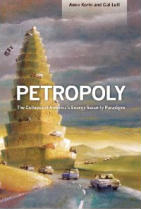 |
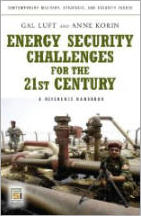 |
"Remarkable collection spanning geopolitics, economy and technology. This timely and comprehensive volume is a one stop shop for anyone interested in one of the most important issues in international relations." U.S. Senator Richard G. Lugar |
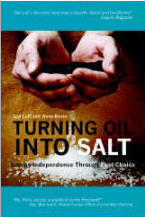 |
"A small masterpiece -- right on the money both strategically and technically, witty, far-sighted, and barbeques a number of sacred cows. Absolutely do not miss this." R. James Woolsey, Former CIA Director "The book is going to become the Bible for everyone who is serious about energy and national security." Robert C. McFarlane, Former U.S. National Security Advisor |
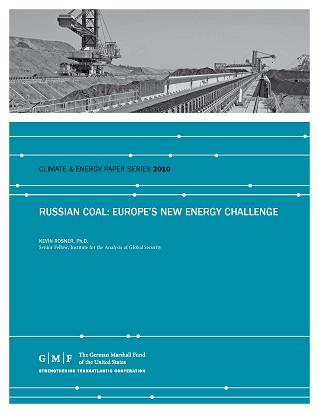 |
| Russian Coal: Europe's New Energy Challenge |
Popular
- Afghanistan, the TAPI Pipeline, and Energy Geopolitics
- Submission Guidelines
- Thorium as a Secure Nuclear Fuel Alternative
- 35 Years After the Arab Oil Embargo
- Protecting Offshore Oil and Gas Installations: Security Threats and Countervailing Measures
- Dr. Réka Szemerkényi
- The Role of Turkey in Global Energy: Bolstering Energy Infrastructure Security
- Energy Security by email
- China's Oil Supply Dependence
- The Future of Electric Vehicles: Setting the Record Straight on Lithium Availability
- The Security Vulnerabilities of Smart Grid
- The Battle Over Rare Earth Metals
- Risk Management and Lessons Learned in Libya
- Gas Exporting Countries Forum: The Russian-Iranian Gas Cartel
- Maritime Piracy: Implications for Maritime Energy Security
- China Takes Gold in Methanol Fuel
- Applying Advanced Technology for Threat Assessment: A Case Study of the BTC Pipeline
- Sohbet Karbuz
- Brazilian Ethanol Policy: Lessons for the United States
- Protecting Offshore Oil and Gas Installations: Security Threats and Countervailing Measures
- Militancy and Oil Violence in the Niger Delta
- Energy Security as National Security: Defining Problems Ahead of Solutions
- Terrorism & Public Utility Infrastructure Protection
- Dr. Donna J. Nincic
- Will ENI’s discovery in Egypt sink Israel’s Leviathan?


